Your Strategic
IP Partner

Your Strategy First®

Our Purpose

The world judges us based on what they can see and touch. However, at Metayage, we believe in the true value and power of Intangible assets. The entrepreneurial journey of an innovative startup founder can be extremely challenging, especially when very few believe in your inventive ideas, and most people tell you that your ideas are worthless. At Metayage, we act as a friend, well-wisher, mentor, and a strategic IP partner to nurture your idea and protect it by getting you patents that certify that your invention is unique and inventive, and give you exclusivity. We partner with you at each stage of your journey, right from idea, prototyping and launch, fundraising, scaling up to exit.

Our Services


Metayage acts as an extended in-house IP department and also doubles up as an external IP firm

Our services encompass the entire IP life cycle right from IP Identification to Monetization

International Patent Protection

We get speedy patent grants in all major markets around the world seamlessly.

IP Due Diligence

We provide clarity on patent portfolio quality, and identify red flags and provide recommendations on reducing risks due to infringement of third-party IP rights.

Patent Intelligence

We provide actionable intelligence based on patent data for Competitive Intelligence, Freedom to Operate, and Invalidating patents of competitors.

International Trademark Protection

We enhance your brand value by registering your valuable brand names, logos, and product names as trademarks in key markets.

International Design Protection

We give you an edge over your competitors by protecting your product's unique aesthetic features in major markets worldwide.

Strategic IP Partner

We act as your extended IP department and conduct IP Audits, prepare patent intelligence reports and update your IP Strategy periodically.

Why Metayage

IntellectualProperty.

Case Studies

PI Ventures

Conducted patent due diligence on Freedom to Operate and Patentability prior to Venture Capital Investment in deep tech startup.

Saankhya Labs

Prosecuted and conducted patent valuation that includes 25 granted US patents, and patents in India, Europe, Japan, and South Korea.

Niramai

International patent portfolio in the US, EPO, India, Japan, Canada, China etc. 9 US patents granted.

Numerify

17 US patents granted, related to AI driven data warehousing and analytics for Business Intelligence.

Kernel LABS

Acted as an in-house patent counsel for their portfolio companies such as Omnivor and Trusted Key (acquired by Workday, Inc).

What Our Clients Say About Metayage

Frequently Asked
Questions

Patents have an impact on the R & D, Finance, Marketing, HR and Legal departments of a company. For R&D, it protects their investment and maximizes ROI. For Finance, it increases the valuation, generates royalties and increases profits. For Marketing, it strengthens the branding, differentiation, and competitive advantage. For HR, it enables a culture of innovation, and helps to retain top technical talent. For Legal, it mitigates IP infringement risks and secures the company's valuable assets.

Since patents are territorial/country-specific, the selection of countries/jurisdictions to apply for a patent should be based on which countries are major markets, and which countries the product is likely to be made or used in. Other considerations include, the country of incorporation, likelihood of success in securing patents, ability to enforce successfully, timelines, and costs.

An IP Strategy is a systematic roadmap to align a company's business goals with Intellectual Property related initiatives. The IP strategy depends on what stage the company is in, its short and long term goals, its competitive position within the industry, etc. IP initiatives such as IP Audits. Patent intelligence, Freedom to Operate, IP protection, IPR enforcement, IP licensing and IP valuation are conducted at different stages depending on the company's IP Strategy.

The extent and scope of disclosure in a patent application should be sufficient to successfully obtain patent protection while also preserving key trade secrets to the extent possible. To obtain a patent grant, a patent application must satisfy novelty, non-obviousness, subject matter eligibility requirements, and enablement. For enablement, every element of every patent claim should be described in sufficient detail to enable a person of average skill in the technical field that the invention relates to, to make and use the invention without undue experimentation.

Especially before launching a product in new markets, but preferably even during the R&D stage, conduct a Freedom To Operate (FTO) search in those countries where you intend to launch your product. This helps to identify patents owned by third parties that your product might potentially infringe. Once these patents are identified, analyze the claims of these patents based on the specification to determine their scope of coverage. Then you can reverse engineer your product to avoid infringement, or even look at opposing or invalidating third party patents that pose a significant threat to your business.

Typically the relationship with an IP firm starts fairly early in the journey, during R&D and product development. At this stage, your company will typically not have an in-house IP department or even an in-house IP counsel. Hence, the right guidance on an IP strategy that aligns your company's requirements with IP initiatives is crucial. Transparency and clarity in communication will help you make informed decisions. Expertise and track record in successfully obtaining IP protection is another key metric to consider. Last but not least, expertise in multiple jurisdictions is critical if you want to build an international patent portfolio

Latest Blog & Articles

View All Blogs

04/Aug/2022

5 lies you’ve been telling yourself to delay patent protection

I am too busy – The truth is that if it is important and valuable enough everyone finds time for it.

24/Jan/2021

What are the patent trends in China as compared with India?

Over the past decade, the volume of patent filing in China has seen a dramatic rise.

01/Apr/2023

What are the challenges in obtaining patent protection for software-related inventions?

Software inventions are increasingly important today because they enable automation, speed, connectivity, innovation, and effective data management. Businesses who innovate using software gain competitive advantage

Metayage
How to identify inventions for patenting? | Metayage

How to identify inventions for patenting?
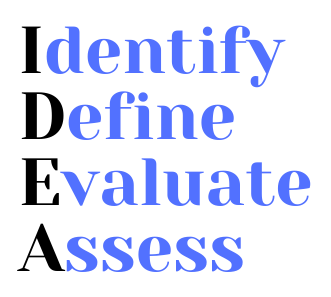
 

Congratulations on coming up with a new technology and venturing on your entrepreneurial journey. Maybe you have built a minimum viable product, got interest from potential customers and now you are ready to pitch to investors. At this time, you may be wondering how much your company is worth, and on what basis you can determine the value of your company. The value of an early stage technology startup is hard to determine, because you still do not have significant revenue or profits. What you may have is a team, a product, and some potential customers who have shown interest in the proof of concept. Hence, most of the value of your company is intangible. But don’t lose heart, that itself is significant. Did you know that over 80% of the value of technology companies comes from their intangible assets?


For a technology company, patents are particularly important, since they provide the broadest and strongest protection for products or processes that solve a technical problem and are capable of industrial application. A strategic patent portfolio creates barriers to entry for competitors and increases the valuation of the company.


However, the first step towards building a strategic patent portfolio is to list out important technical problems that are relevant to your field. As a technology company in the field of for example “Artificial Intelligence for Retail, or Computer vision for traffic management, you can come up with a list of specific technical problems in that field. One way to do this is to conduct a search on patent databases based on a patent classification class or sub class. You will get hundreds of patents in that field. Each patent would be trying to solve a specific technical problem, like for example detecting and classifying a traffic light.


You will also get the name of the company that has applied for the patent (e.g. Ford Global). You can understand the approach described in the patent. It may have certain advantages but it may also have some limitations or drawbacks. If you can come up with a better solution that overcomes those limitations and patent it, you know that the company which owns the patent for their method of classifying traffic lights will be interested in licensing your patent or acquiring it.


Like this, you can list out the major players in your field and list the problems they are spending millions of dollars in trying to solve and patent. Build teams who work on each of these high value problem statements. These high value problem statements, when solved are going to give you maximum return on your investment in R&D.  If you come up with better solutions than what the big companies have tried to patent, those companies can become your potential strategic partners, licensees, customers and maybe even potential acquirers. That is also how you can position your company strategically for an exit. Once you list out important technical problems, the next is to identify what inventions you currently have.


The inventions can not only come from the founders of a startup, but also from your technology team, UI/UX team, backend developers etc. For a startup that is inter-disciplinary, the inventions could be related to mechanical aspects, electronics. Software, AI, IoT, biological markers, chemical compositions, etc. A classic mistake made by startups is to file a single patent to tick a checklist that focuses more on the mechanical or hardware aspects and to ignore the software, AI, or algorithms. Although an abstract concept or a pure business method, or a mathematical formula as such is not patentable, they are patentable when combined with hardware to produce a technical effect or make an improvement to a technical field.


Every invention is applied in the context of business, so there is a business method associated with monetizing the invention. If you’re using technology in a unique way to achieve the business goal, then, that may be something which is, potentially patentable. Whereas if it’s purely a business method, and there is no technology being applied to solve that problem in a new way, it may not be patentable. Further, a combination of software and hardware may be used to implement the business method. The hardware could be in the form of a camera, or a distributed computing architecture of devices communicating with servers through a network.


You can identify what inventions you currently have by asking questions like:

  1. Has the problem that you’re trying to address been a long standing need in the industry?
  2. Does your solution have any new steps, features, or elements that didn’t exist?
  3. Is the solution routine or is it unconventional and out of the box?
  4. Is there any improvement to technology or a technical field?
  5. Is it faster, more efficient, more accurate, and/or cheaper that existing approaches?
  6. Does it have an application in the industry which has economic value?


If your answers is yes to most of these questions, there’s a good chance that you may have an invention, which may be worth patenting.

 

Metayage